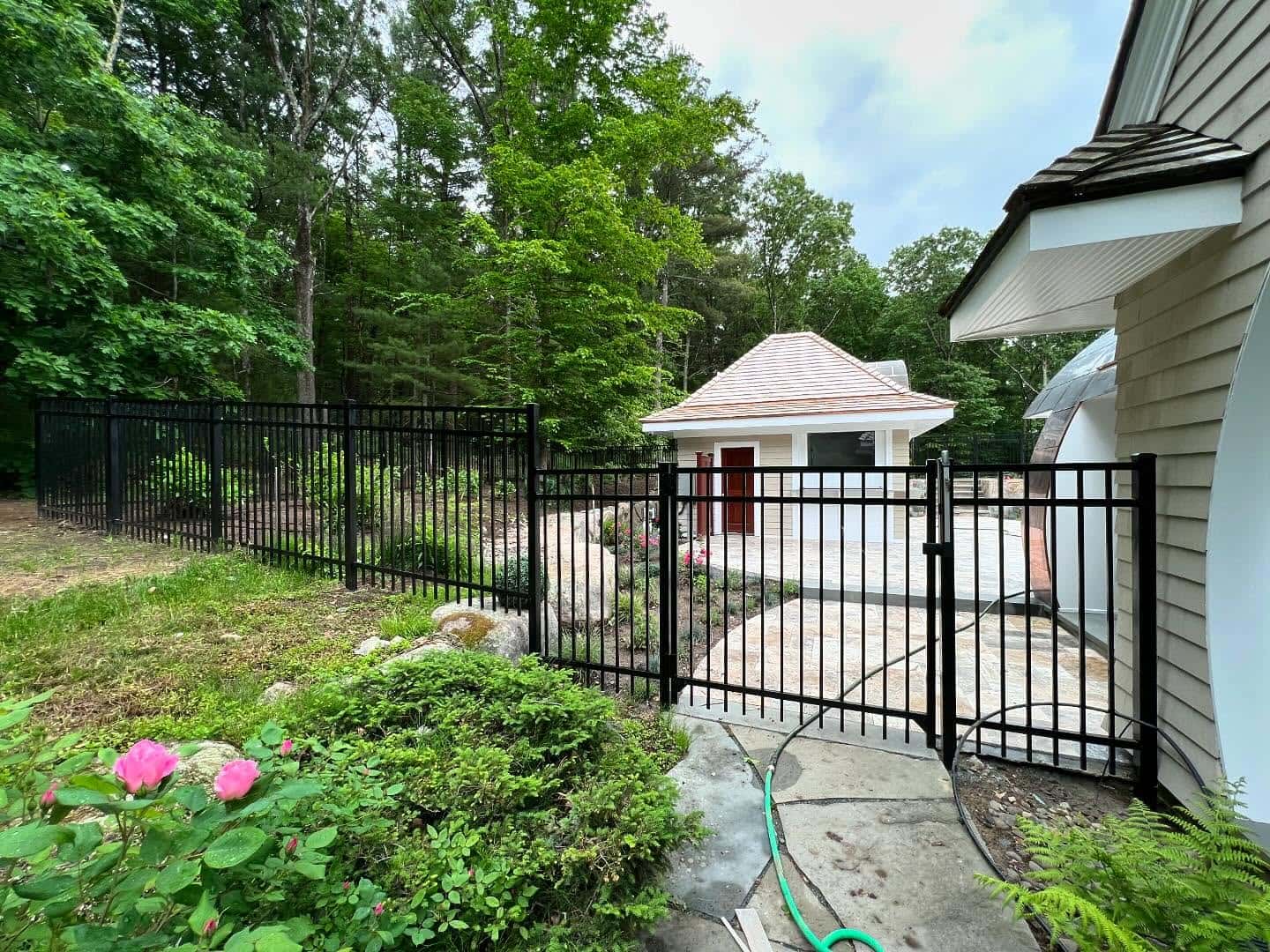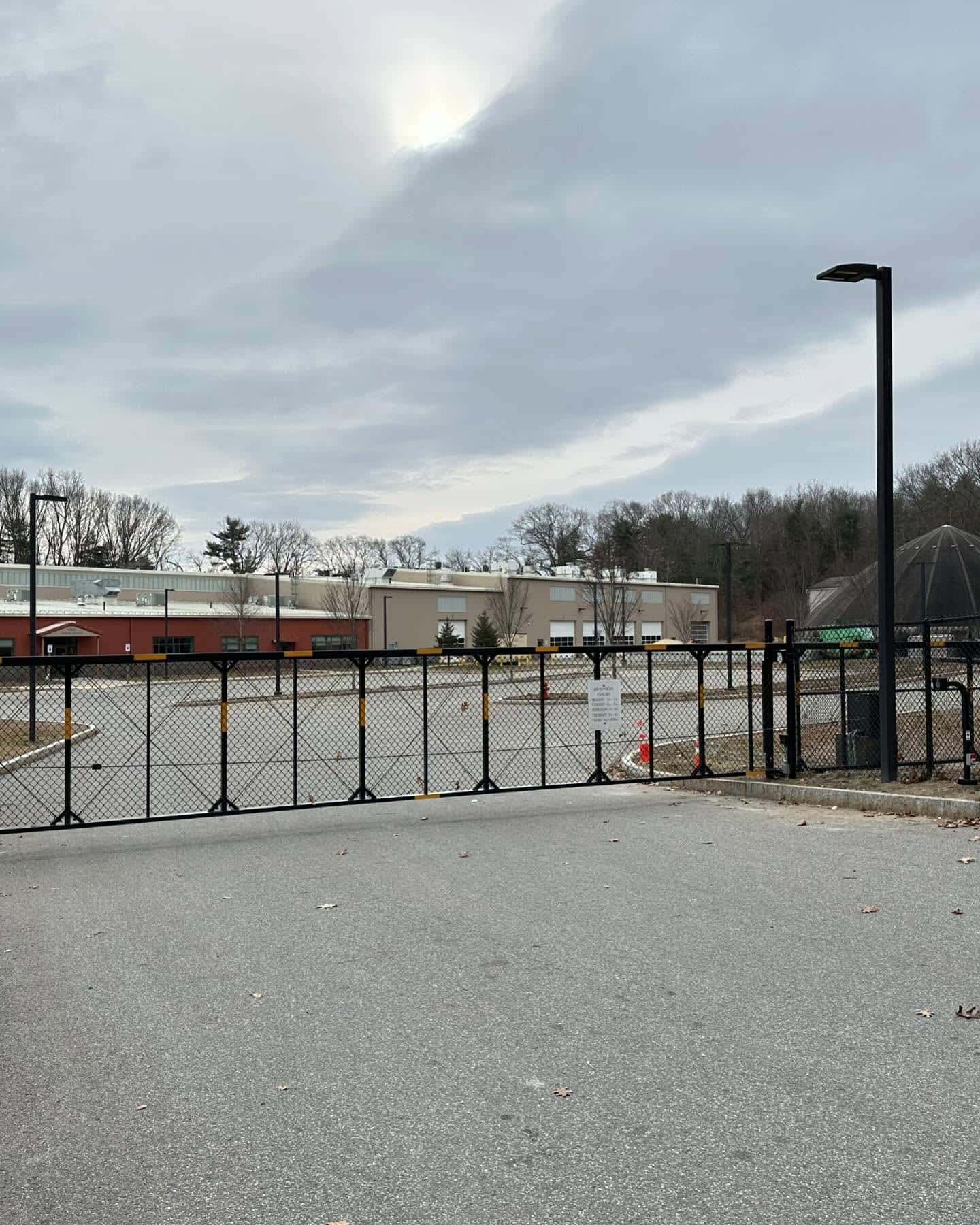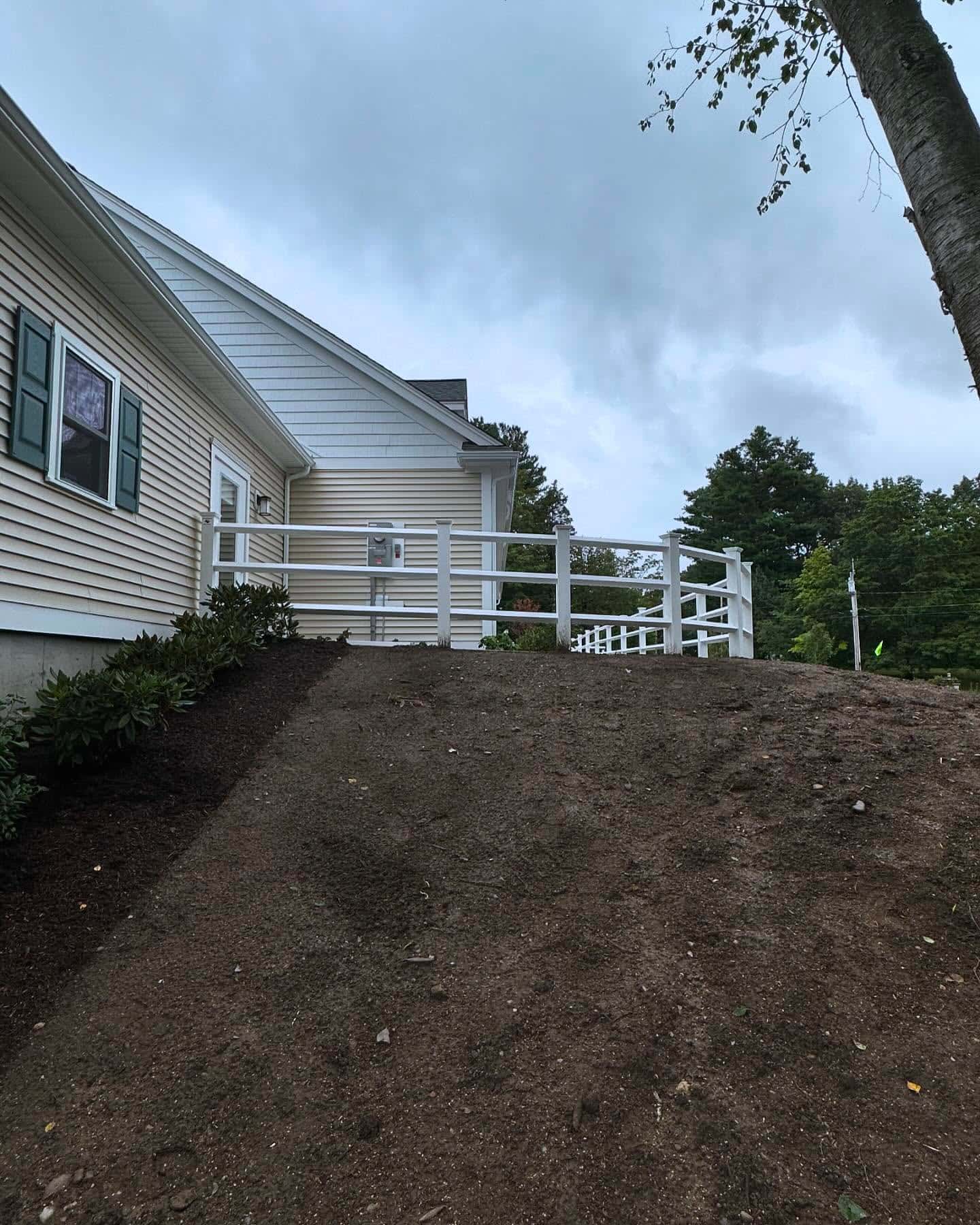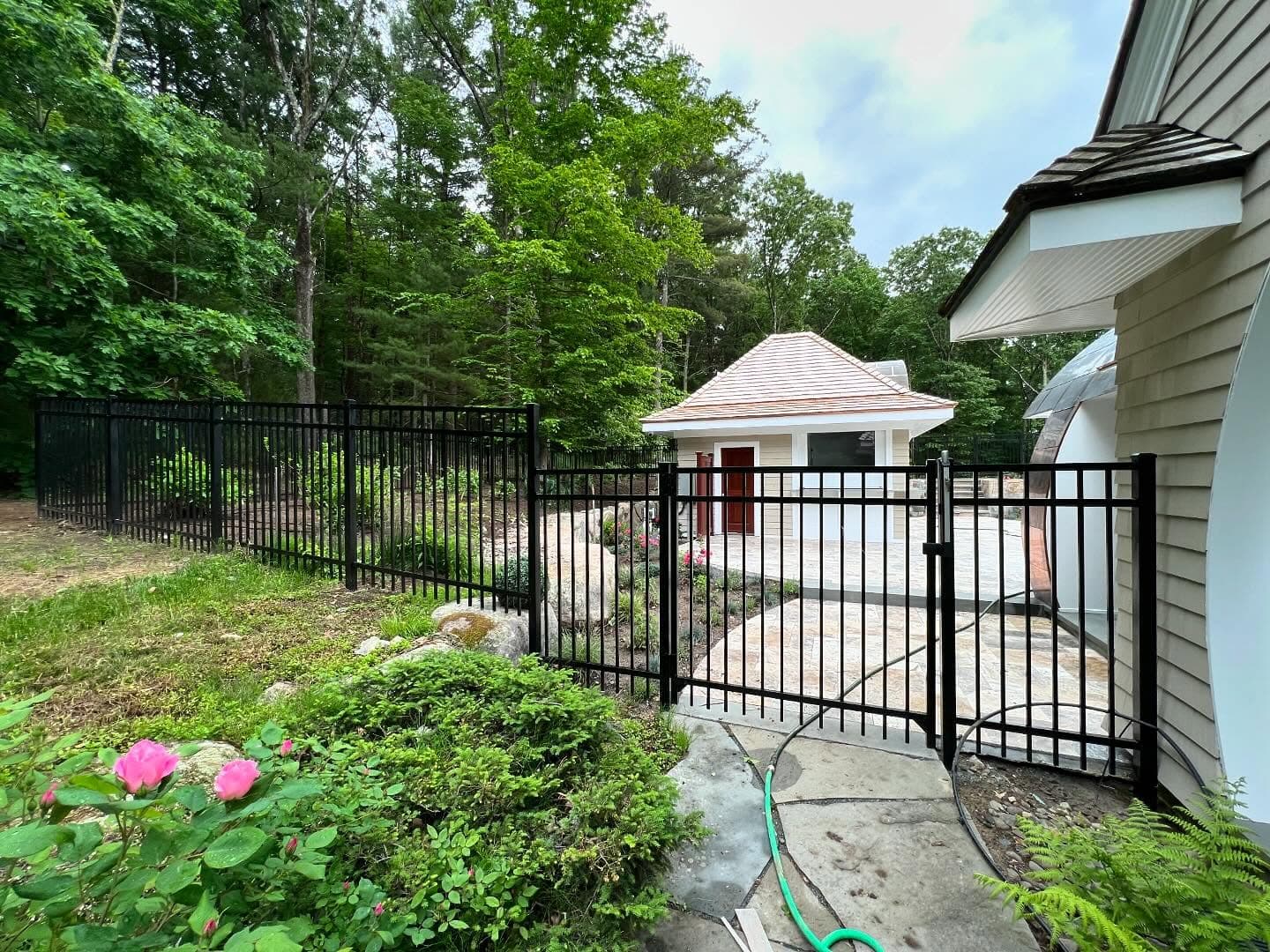
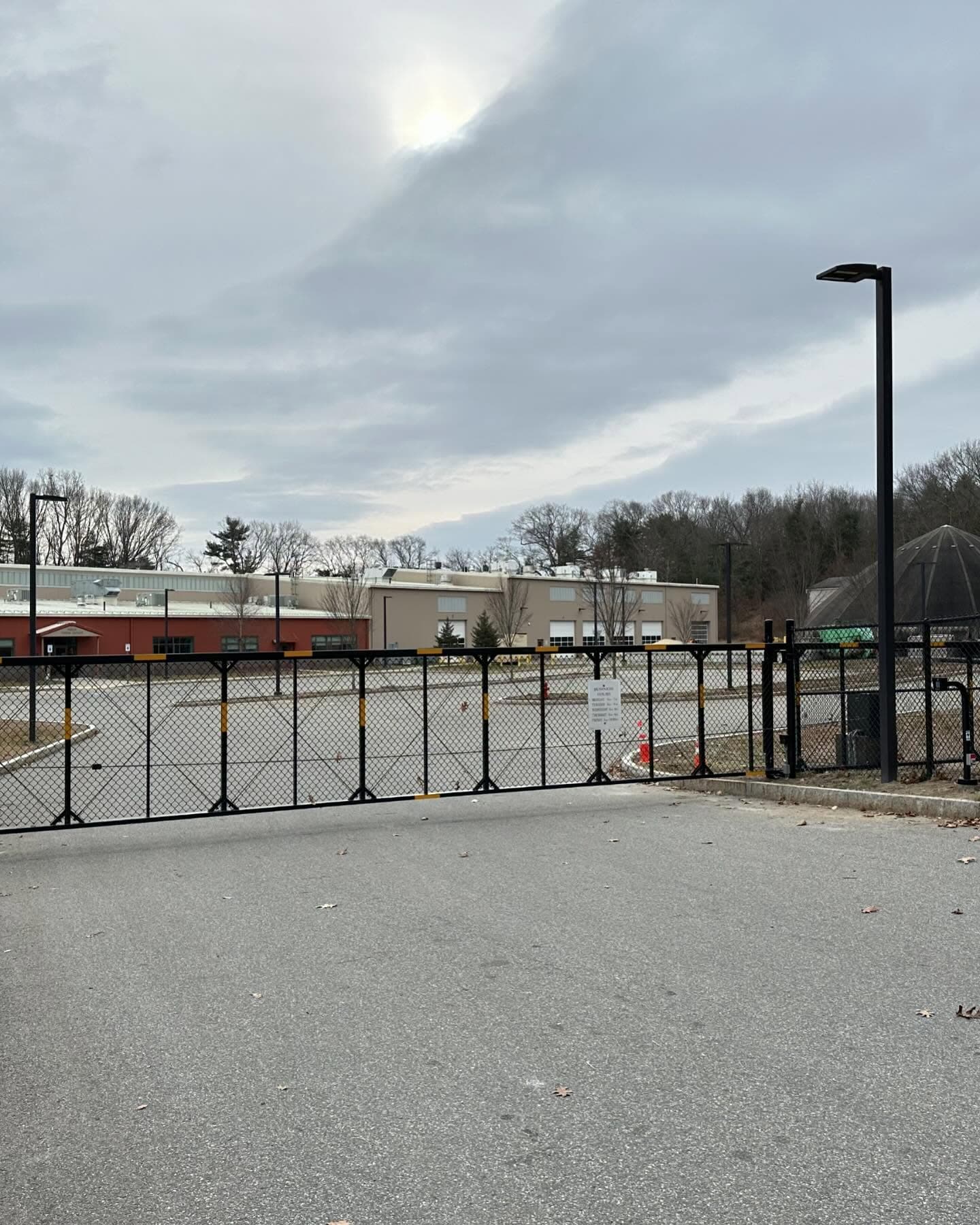
A stain or sealer worked into the wood keeps sun and water out of the grain, so the fence holds its color instead of graying. We put a fresh coat on before the old one gives out.
Keep it looking new. Make it last.
Staining, sealing, cleaning, and rust work that hold off what New England weather does to a fence.
Let's Get Started On Your Fence Project...
The work
Leave wood out in the New England sun and rain with no finish on it and it does more than fade. Ultraviolet light and moisture wear down the surface, so the boards go gray, roughen, and begin to check, the fine splits that run along the grain. A finish is what slows all of that down.
Put back on a regular schedule, a stain or sealer keeps water and sun out of the grain, so the fence holds its color and its strength instead of weathering early. We match the finish to your wood, clean the surface first, and put it on so it lasts.
What we build
Every estimate is set to your property, but this is the shape of the work.
A stain or sealer worked into the wood keeps sun and water out of the grain, so the fence holds its color instead of graying. We put a fresh coat on before the old one gives out.
Dirt and mildew dull wood and leave green and black streaks on white vinyl. We wash the fence down so the surface is clean before any finish goes on, and vinyl gets its look back.
Steel and iron pit and rust where the coating wears through. We take the rust back to sound metal, prime it, and recoat, so it stops spreading and the fence stays solid.
Hinges loosen and a gate that once swung true starts to sag and catch. We reset the hinges, square up the frame, and get it latching again.
A walk of the fence to catch a loose post, a failing finish, or a spot of rust while it is still small, before winter drives it deeper.
How we work
The same order of operations on every job, so nothing gets undone later.
We start by walking the fence with you to see what it needs: a wash, a fresh coat, rust work, a gate that has started to sag. We clean and prep the surface before anything else, because a stain or paint put over dirt or loose finish will not hold. Then we apply the finish made for your wood or metal, and check the posts, hardware, and gates while we are there.
Why AnyFence
A coat over dirt, mildew, or flaking finish peels within a season. We clean and sand back to a sound surface first, so the new finish bonds and stays on.
Not every stain suits every board. We match the product to your wood so it soaks in and protects, rather than sitting on top and failing early.
Paint straight over rust only hides it while it keeps spreading. We take it back to clean metal before we prime and recoat.
A loose post or a worn spot found early is a quick fix. We flag it while we are on site, before weather turns it into a replacement.
From our work portfolio
Different yards, grades, gates, and property lines, built by AnyFence crews.
Materials
These are the materials for this service. Pick by look, upkeep, and budget, or let us recommend on the site walk.
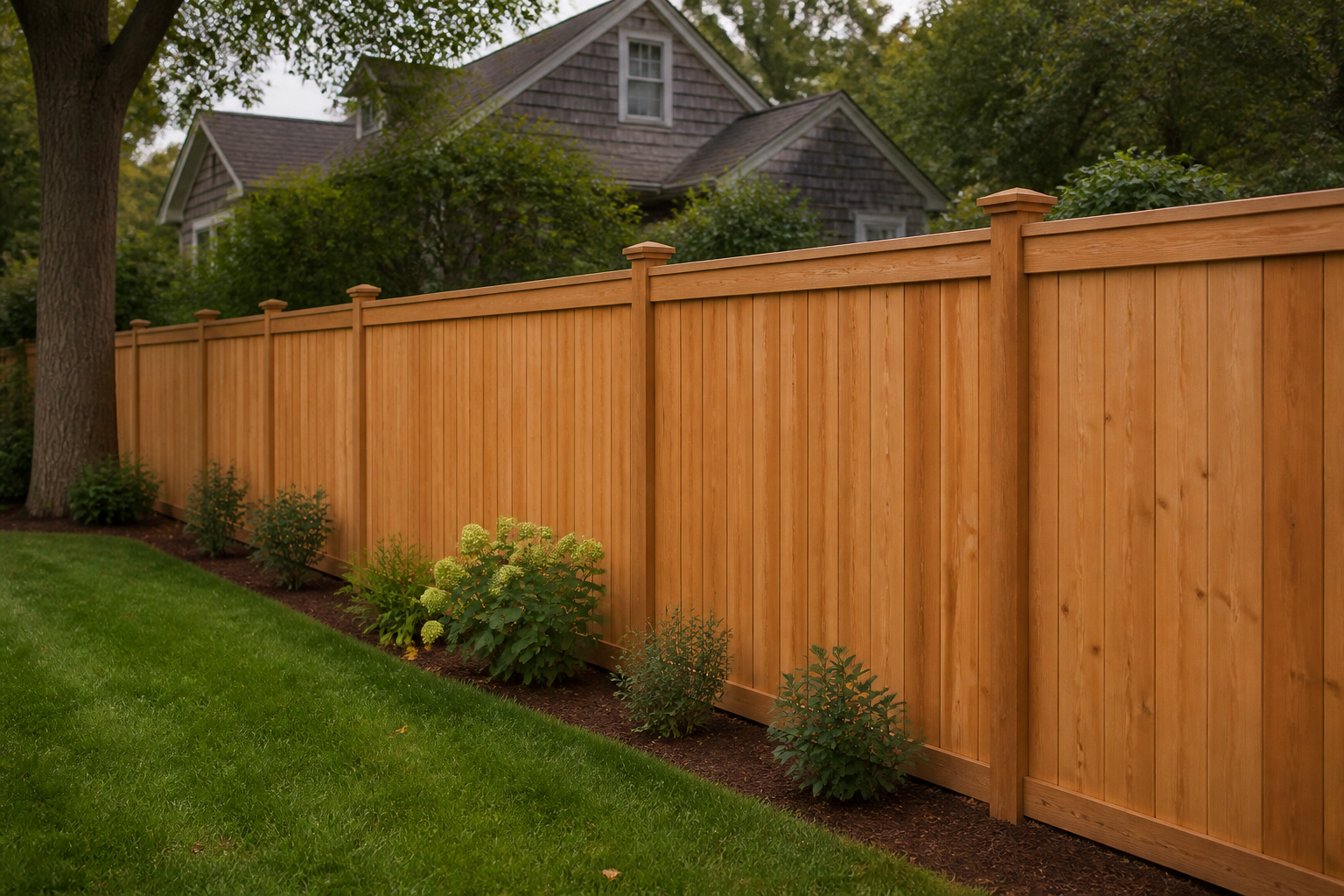 Wood Privacy FencesSolid 6 ft cedar or pressure-treated pine, no gaps, stockade or board-on-board. Full coverage from grade up for overlooked yards, exposed decks, and pools. The most wind-loaded fence we build, so post depth carries the job.
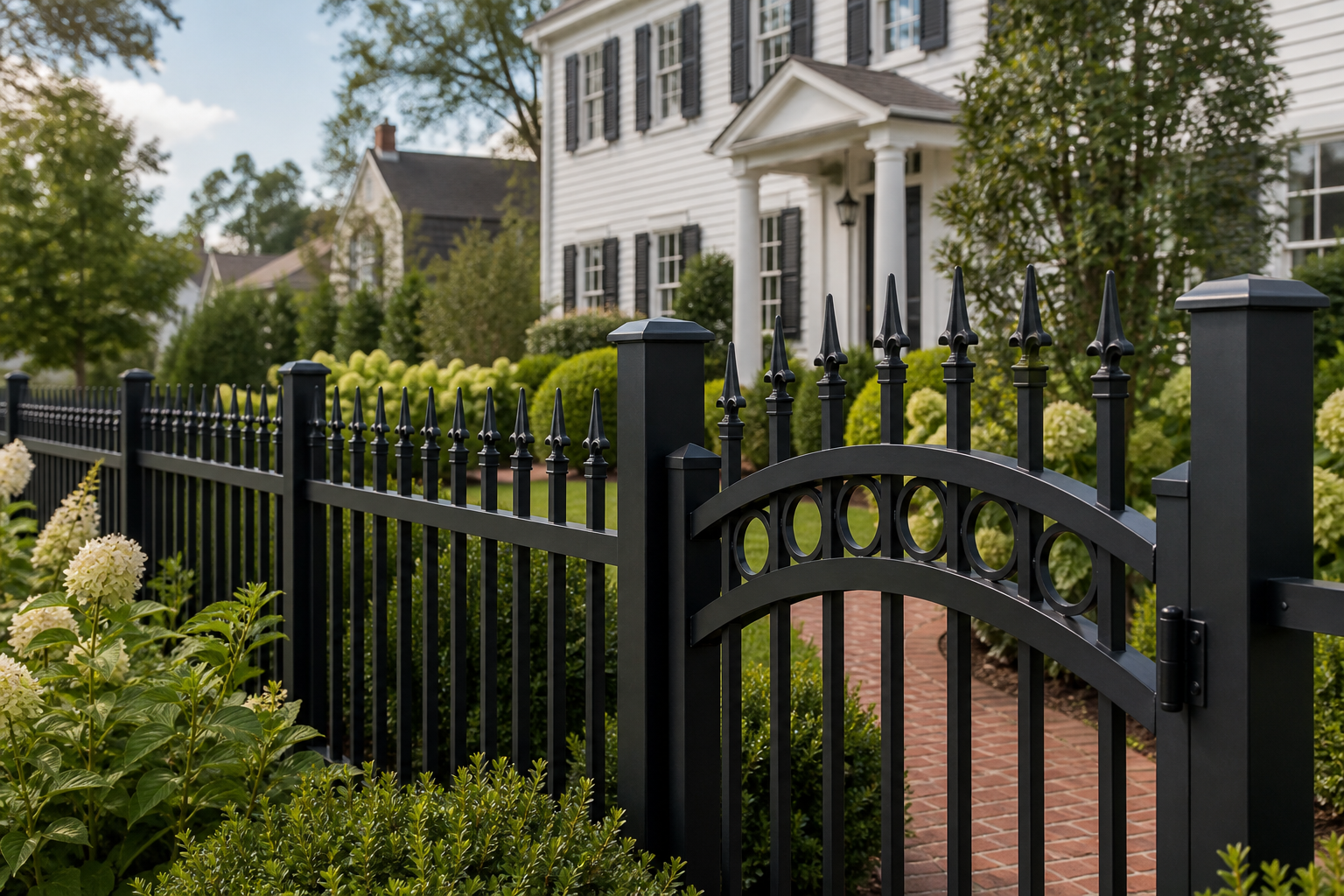 Aluminum FencesThe rust-proof ornamental fence. Aluminum panels rack to follow a sloped yard, arrive powder-coated in black or bronze, and meet Massachusetts pool barrier code at 4 ft with self-closing hardware. Runs $28 to $134 per foot installed.
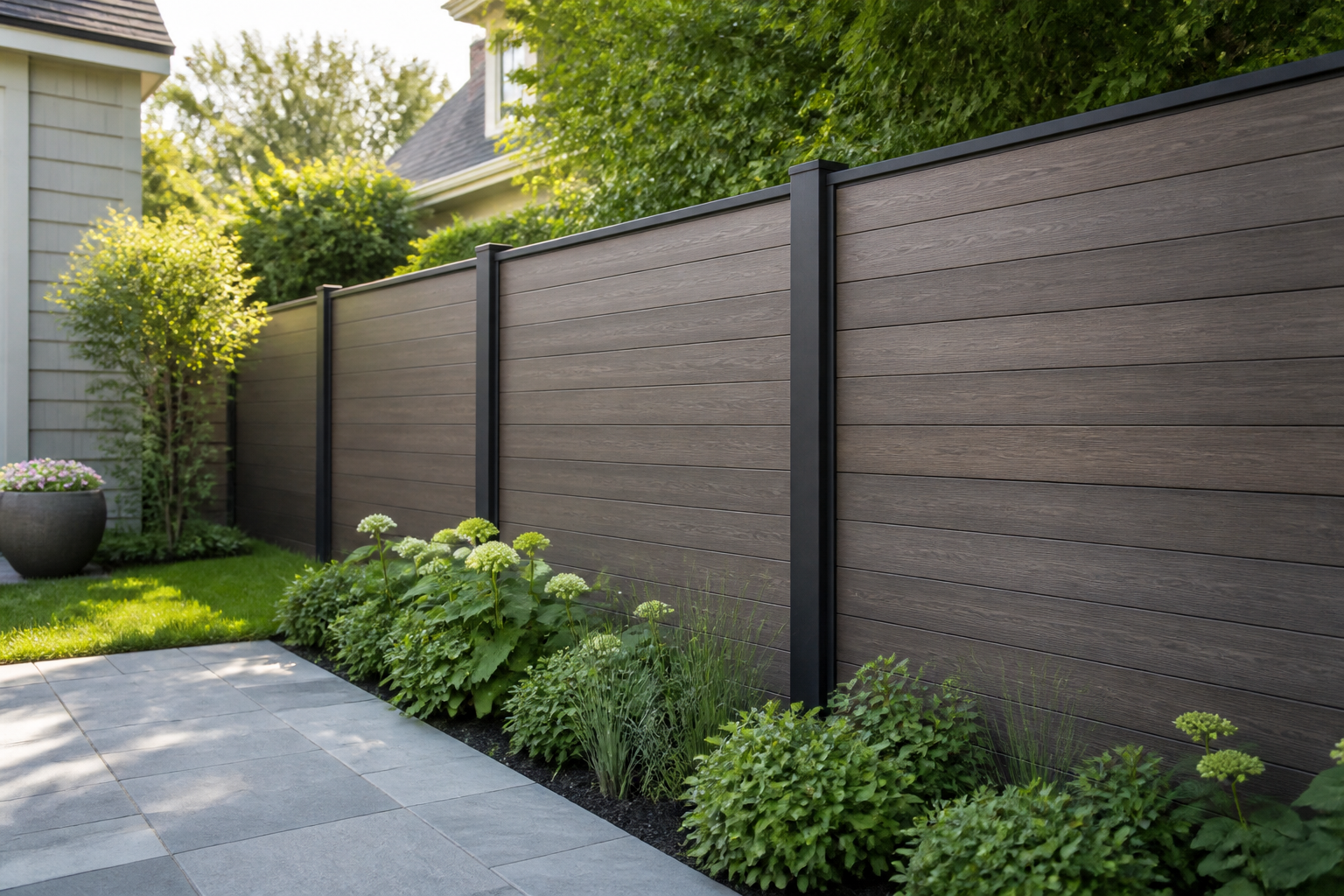 Composite FencesWood-look boards of wood fiber and recycled polymer on aluminum-reinforced posts. Tougher than vinyl in cold, more convincing up close, with a quote based on the selected boards and framing. Built in two styles: privacy and rail.
FAQ
It depends on the finish and the exposure, but most oil-based fence stains and sealers want a fresh coat every two to three years, sooner on the sides that take the most sun. An easy check: sprinkle water on the wood. If it beads up, the finish is still working. If it soaks in and darkens the wood, it is time. We will tell you where yours stands.
Usually, yes. Gray is the weathered surface, not rot. We can wash and brighten the wood back toward its color, then seal it so it holds. If any boards have gone soft or split all the way through, those get replaced first.
No stain and no paint, but it does show dirt and mildew, especially white vinyl in a damp, shaded spot. A wash with mild soap, water, and a soft brush brings it back. It never needs sealing.
Yes. We take the rust back to clean metal, prime it, and recoat, so it stops instead of eating through. Caught early it is a straightforward job. Left for years it can mean replacing sections.
New wood is often best left to dry out for a few weeks to a few months before its first finish, so the stain can soak in rather than sit on the surface. We will tell you when yours is ready and can come back to do it.
Kept sealed and clean, a wood fence holds its color and strength far longer than one left bare. Bare wood in New England grays and checks within a few seasons. A maintained one keeps its look and gets years more out of the same posts and boards.