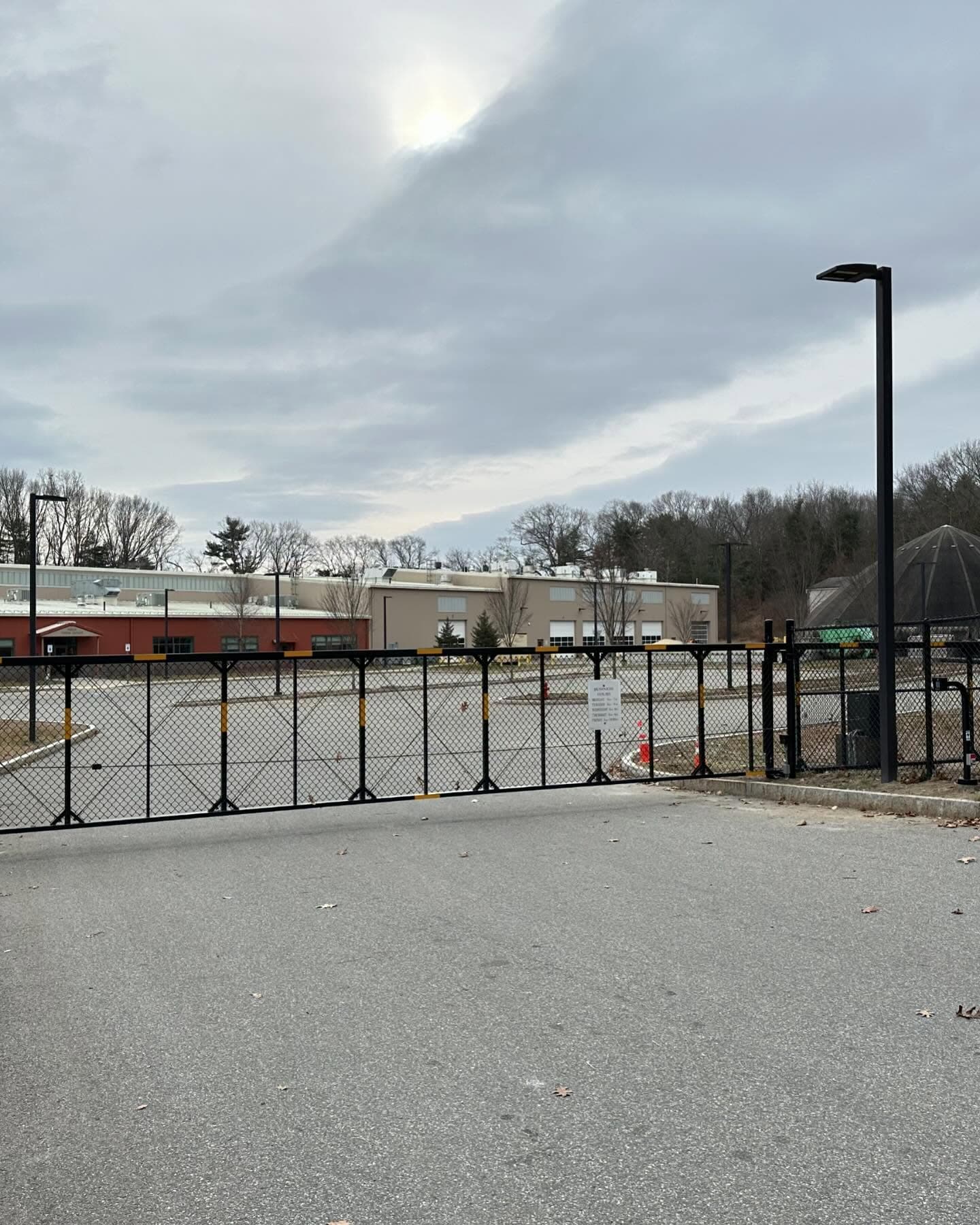
Six-foot cedar, vinyl, or composite that puts the street and the neighbors out of view, right up to the height most towns allow.
Privacy from the street. Room for the kids.
Give the backyard back to your family, on a fence built to stand up to New England winters.
Let's Get Started On Your Fence Project...
The work
Here is something most homeowners never hear until it is too late: the Massachusetts building code lets a fence go up to seven feet before you need a building permit, but most towns zone tighter, usually around six feet along the side and rear and lower out front. Where it sits matters just as much. The fence and every post have to be on your side of the property line.
That is the part we settle before anyone digs. We confirm the line, the height, and what your town allows, so the fence goes up clean and there is nothing to undo later.
What we build
Every estimate is set to your property, but this is the shape of the work.
Six-foot cedar, vinyl, or composite that puts the street and the neighbors out of view, right up to the height most towns allow.
Lower fences that keep the dog in and the front of the house open.
Massachusetts requires a barrier at least four feet high with a self-closing, self-latching gate around a pool. We build to that, and make it look like part of the yard.
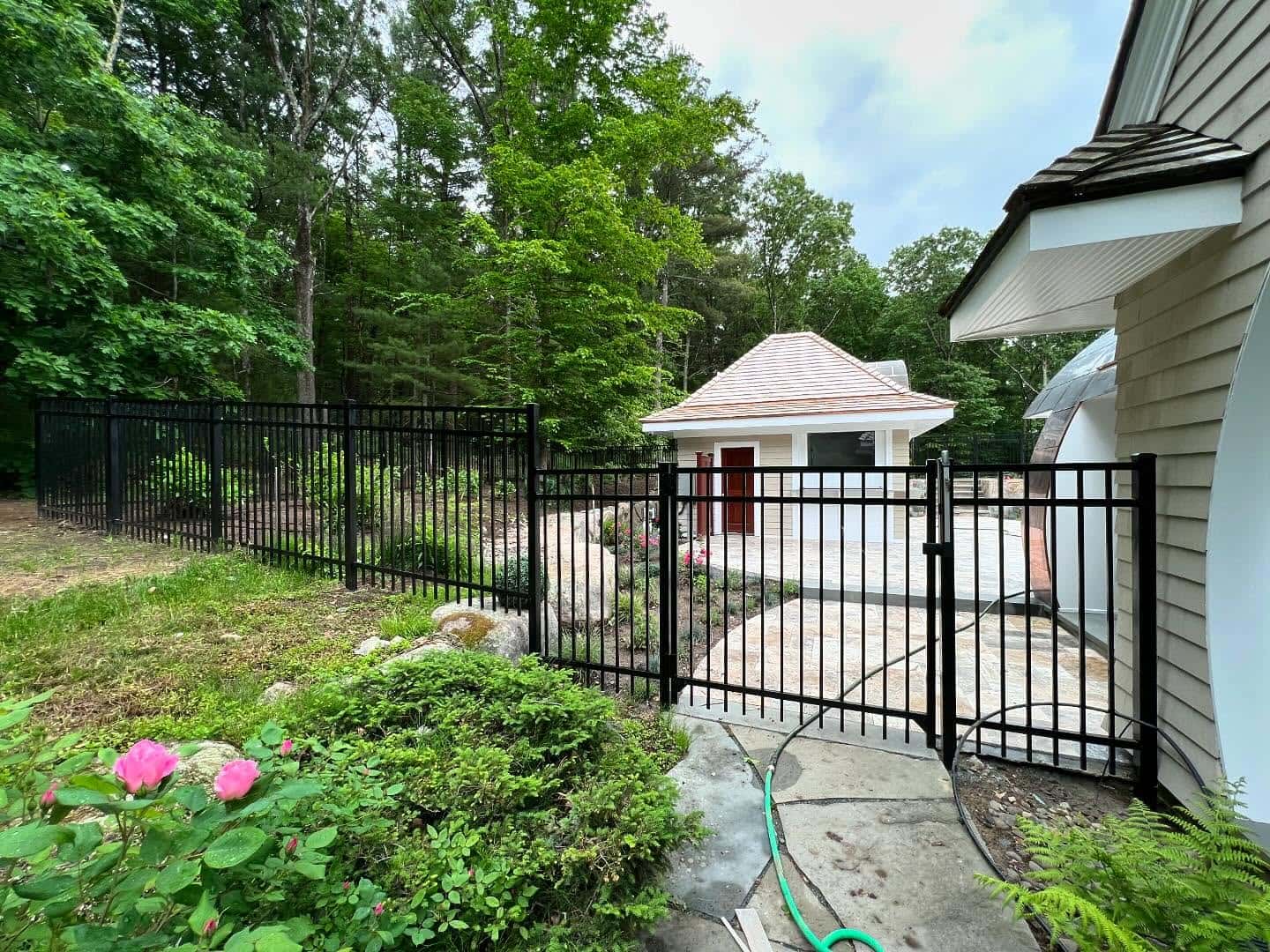
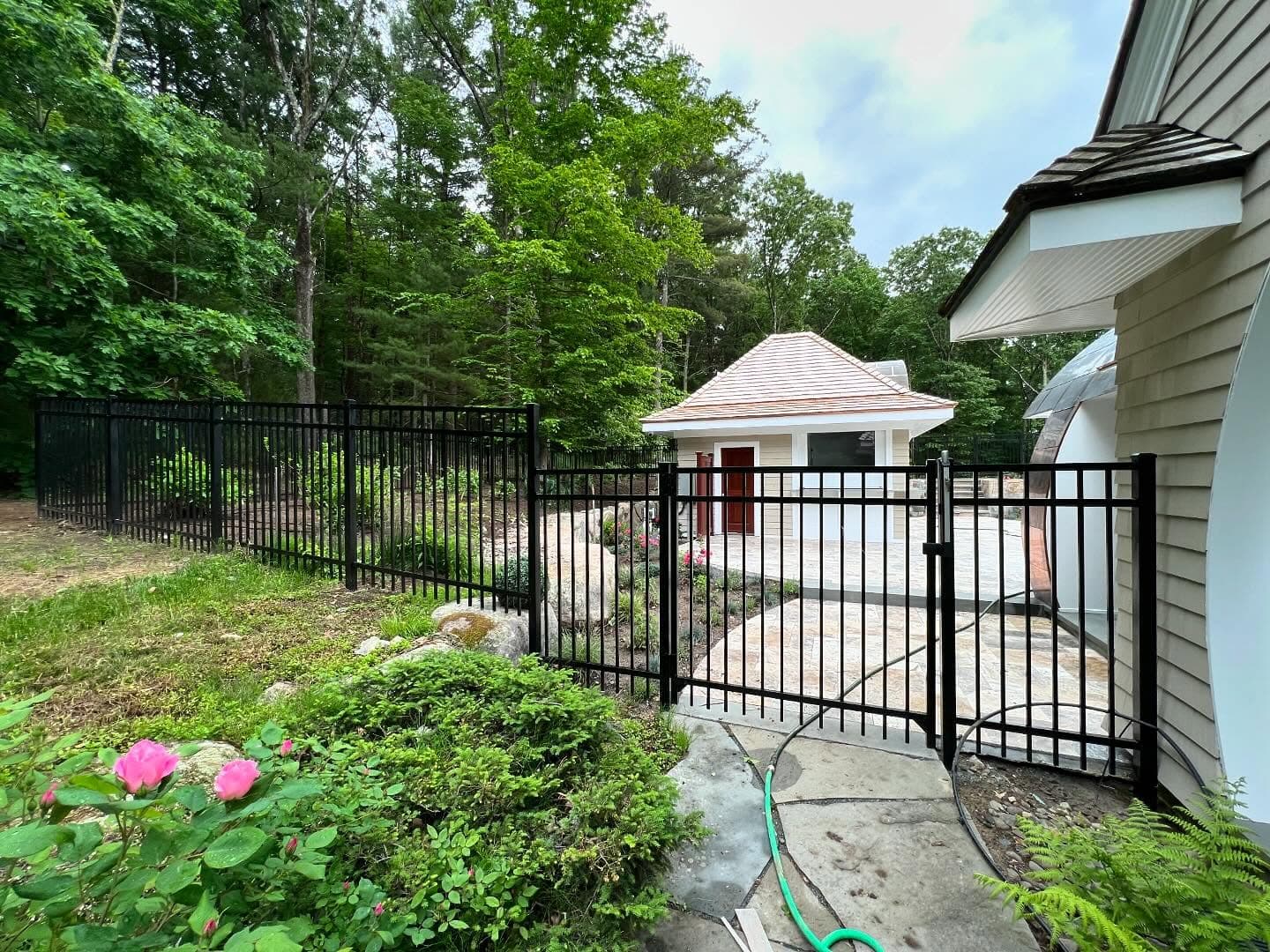
Metal fencing that secures the yard and keeps the sightlines you paid for.
A gate hangs off one side, so its own weight pulls the latch corner down over time. Hung on an oversized post and braced across the frame, it keeps swinging true and latching for years.
How we work
The same order of operations on every job, so nothing gets undone later.
We start at your property. We confirm where your line runs, what your town allows, and how you want to use the yard, then put the layout and the price in writing. When we build, the posts go below the frost line so New England winters cannot heave them, the fence follows the grade so there is no gap for the dog to find, and the site is clean before we leave.
Why AnyFence
Permit thresholds, property lines, and pool rules change by town. We know them and build inside them, so nothing gets flagged.
Most leaning fences failed at the footing, not the panel. Posts set below the frost line stay put through the freeze that lifts shallow ones.
Oversized hinge posts and braced frames, so the gate still swings true long after the novelty wears off.
We tell you what each material costs to own over time, so you buy the fence you want.
From our work portfolio
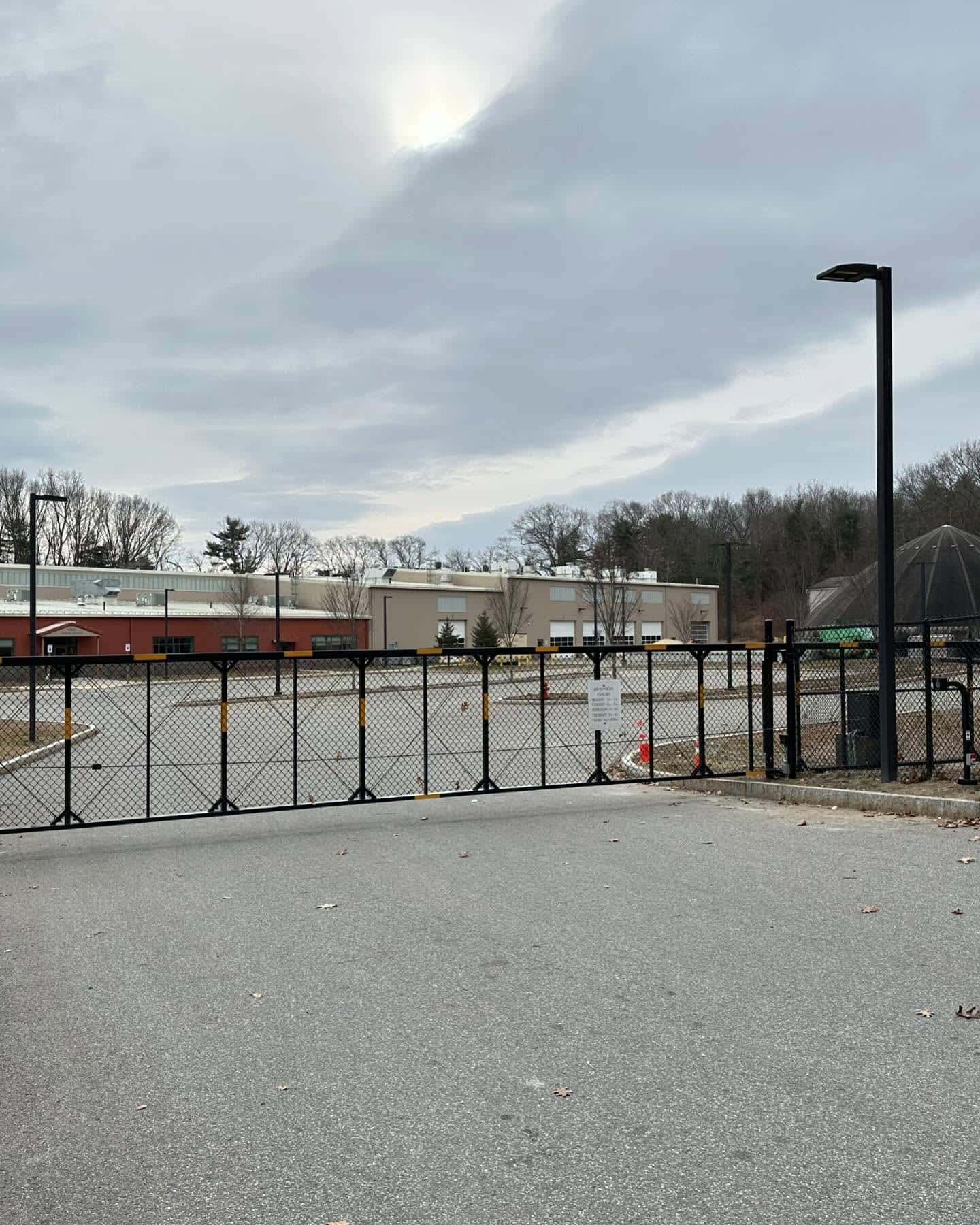
Different yards, grades, gates, and property lines, built by AnyFence crews.
Materials
These are the materials for this service. Pick by look, upkeep, and budget, or let us recommend on the site walk.
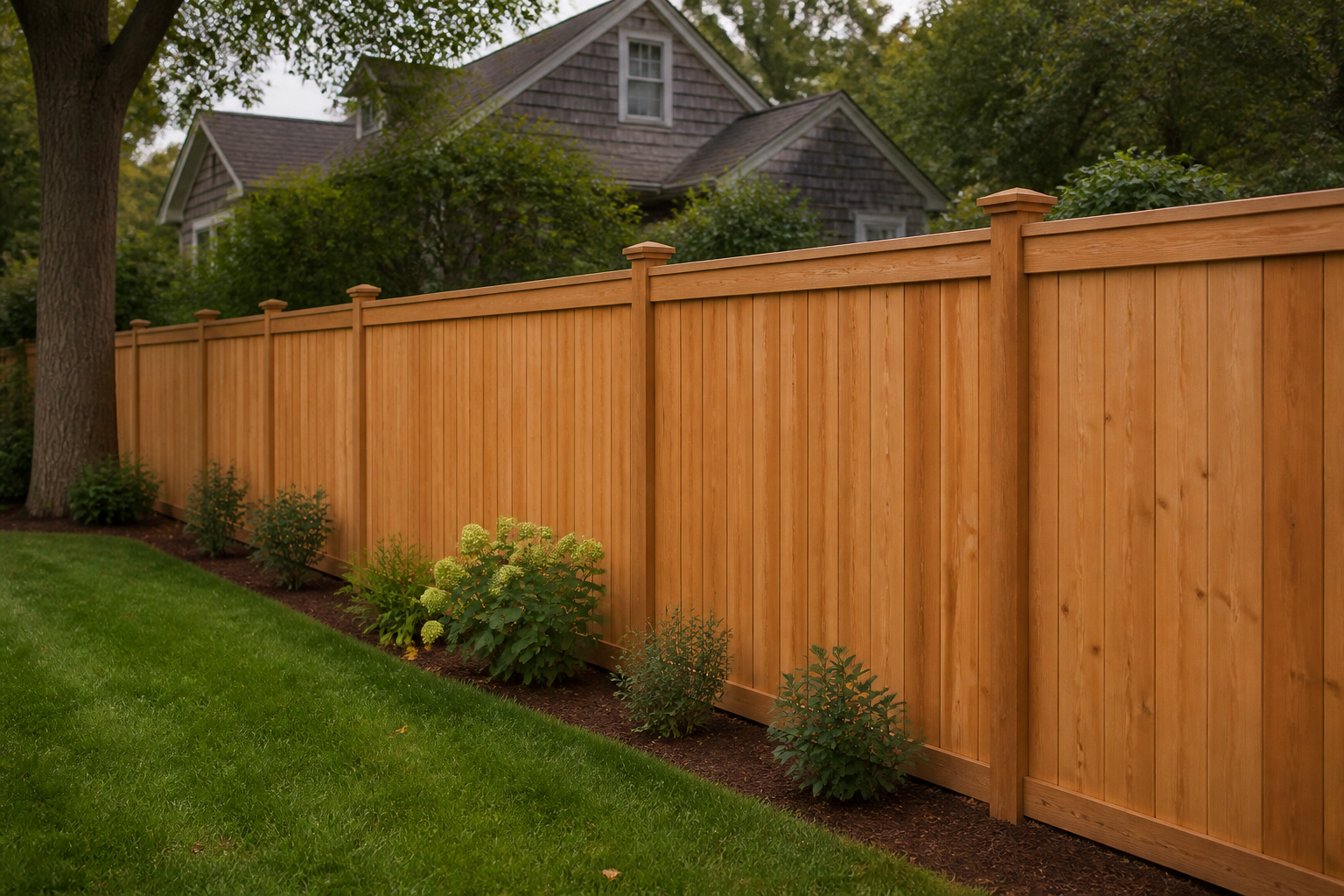 Wood Privacy FencesSolid 6 ft cedar or pressure-treated pine, no gaps, stockade or board-on-board. Full coverage from grade up for overlooked yards, exposed decks, and pools. The most wind-loaded fence we build, so post depth carries the job.
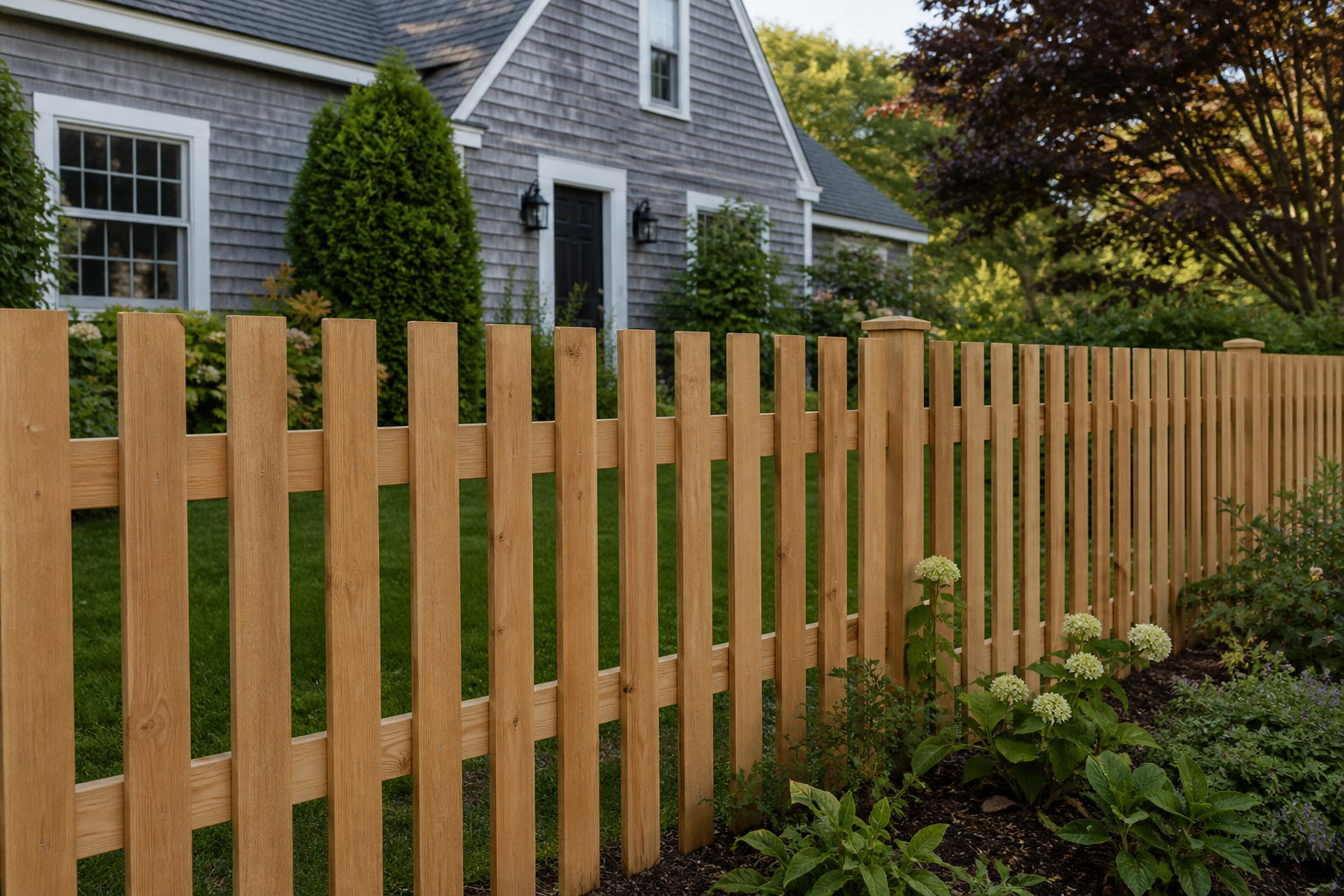 Picket FencesSpaced cedar or pine boards, 3 to 4 ft, painted or stained. The style that carries a front yard: it marks the boundary, holds a small dog, and keeps the sightline open. The most paint surface per foot of any wood fence.
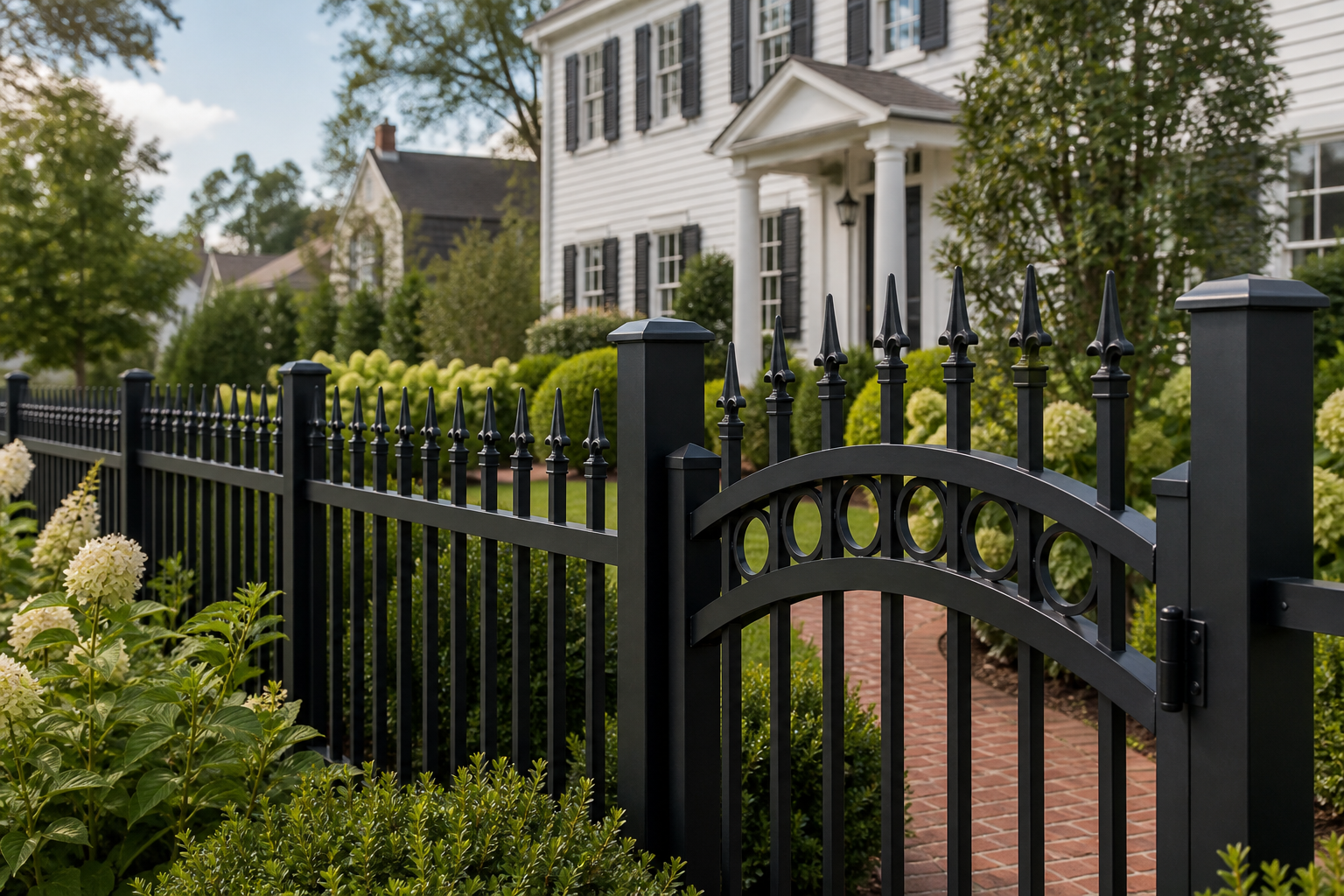 Aluminum FencesThe rust-proof ornamental fence. Aluminum panels rack to follow a sloped yard, arrive powder-coated in black or bronze, and meet Massachusetts pool barrier code at 4 ft with self-closing hardware. Runs $28 to $134 per foot installed.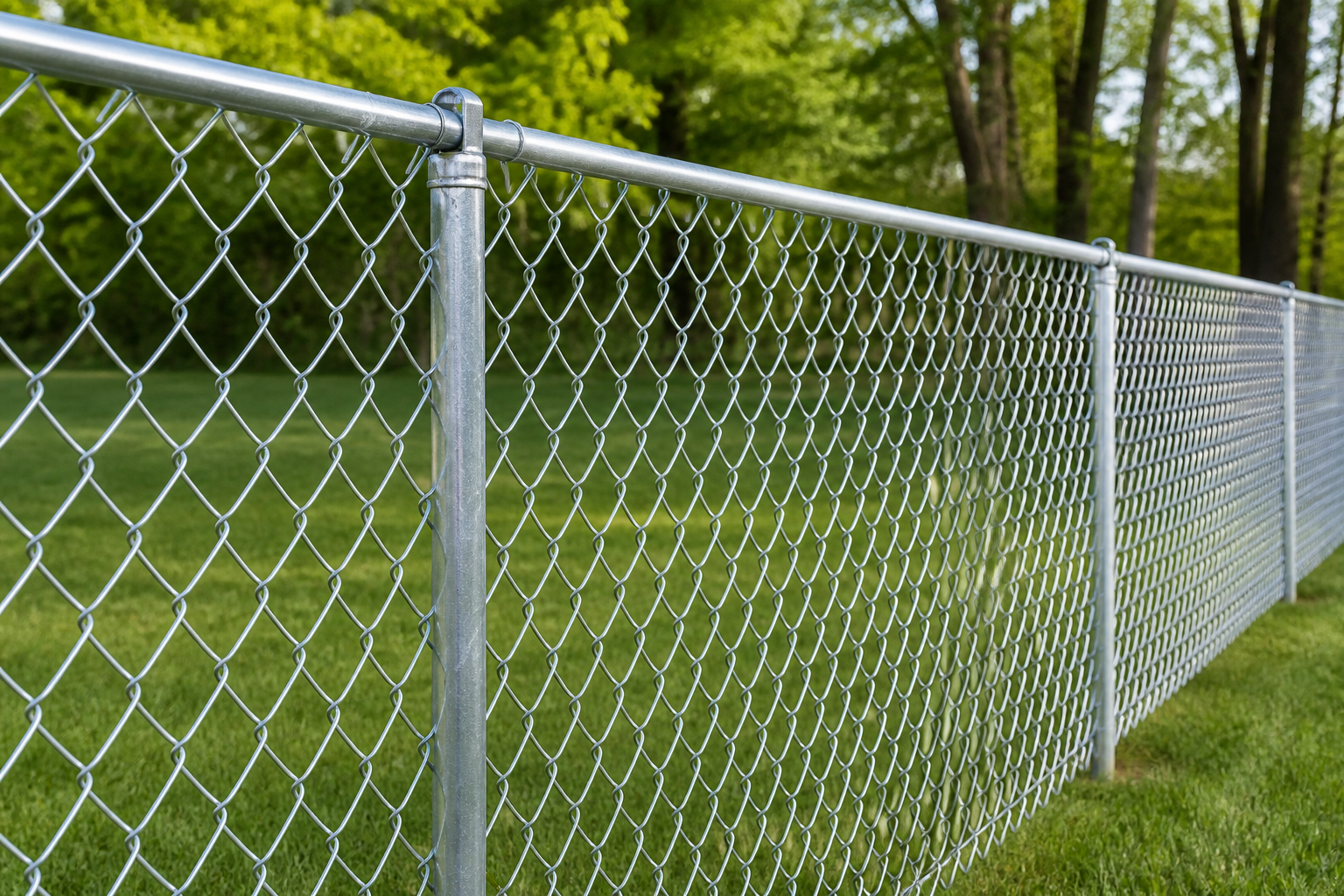
FAQ
The state building code exempts fences up to seven feet from a building permit, but your town's zoning usually sets a lower limit, often around six feet at the side and rear. We check your town before we quote, so you are not the one finding out.
Entirely on your property, posts and all. If the line is not marked, we sort that out first. Massachusetts even has appointed "fence viewers" for property-line disputes, and we would rather keep you out of that.
State code requires a barrier at least four feet high with a self-closing, self-latching gate, and no gap at the bottom a child could slip under. We build to that and make it look like it belongs.
Almost always the posts, not the panels. When the soil freezes it swells and lifts any post set above the frost line, and the fence tips with it. Depth is what keeps a fence standing straight.
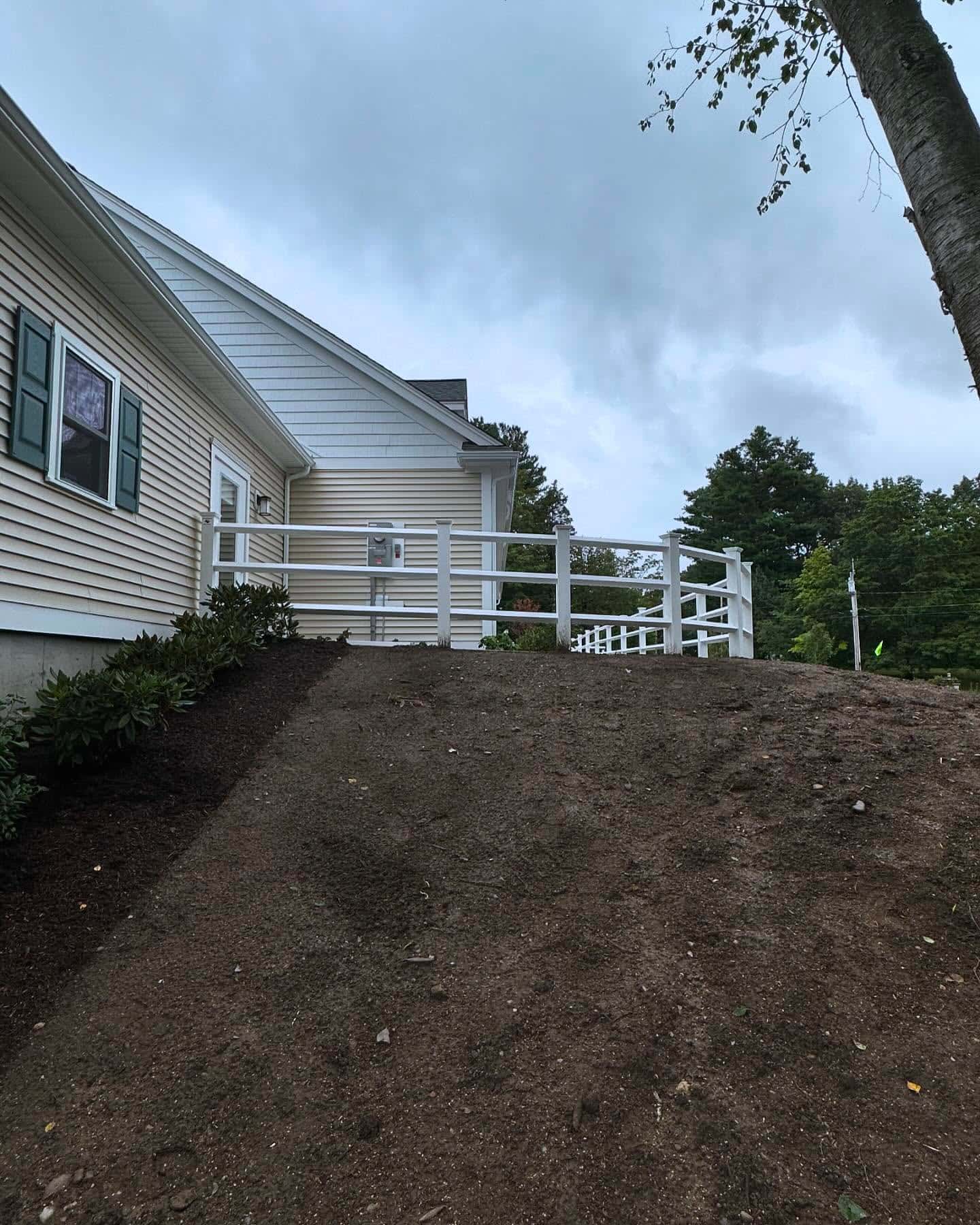
On a grade we can step the fence down in level sections or rack it to follow the ground. Stepping looks crisp but leaves a triangle of open space at the bottom of each panel; racking hugs the grade with an even, low gap. We pick based on the slope and what is behind the fence. Old fencing comes out in the same job.
It depends on the material. Wood tends to run ten to fifteen years, pressure-treated a bit longer; vinyl and metal can go twenty-five or more with little upkeep. We will walk you through the tradeoff before you decide.