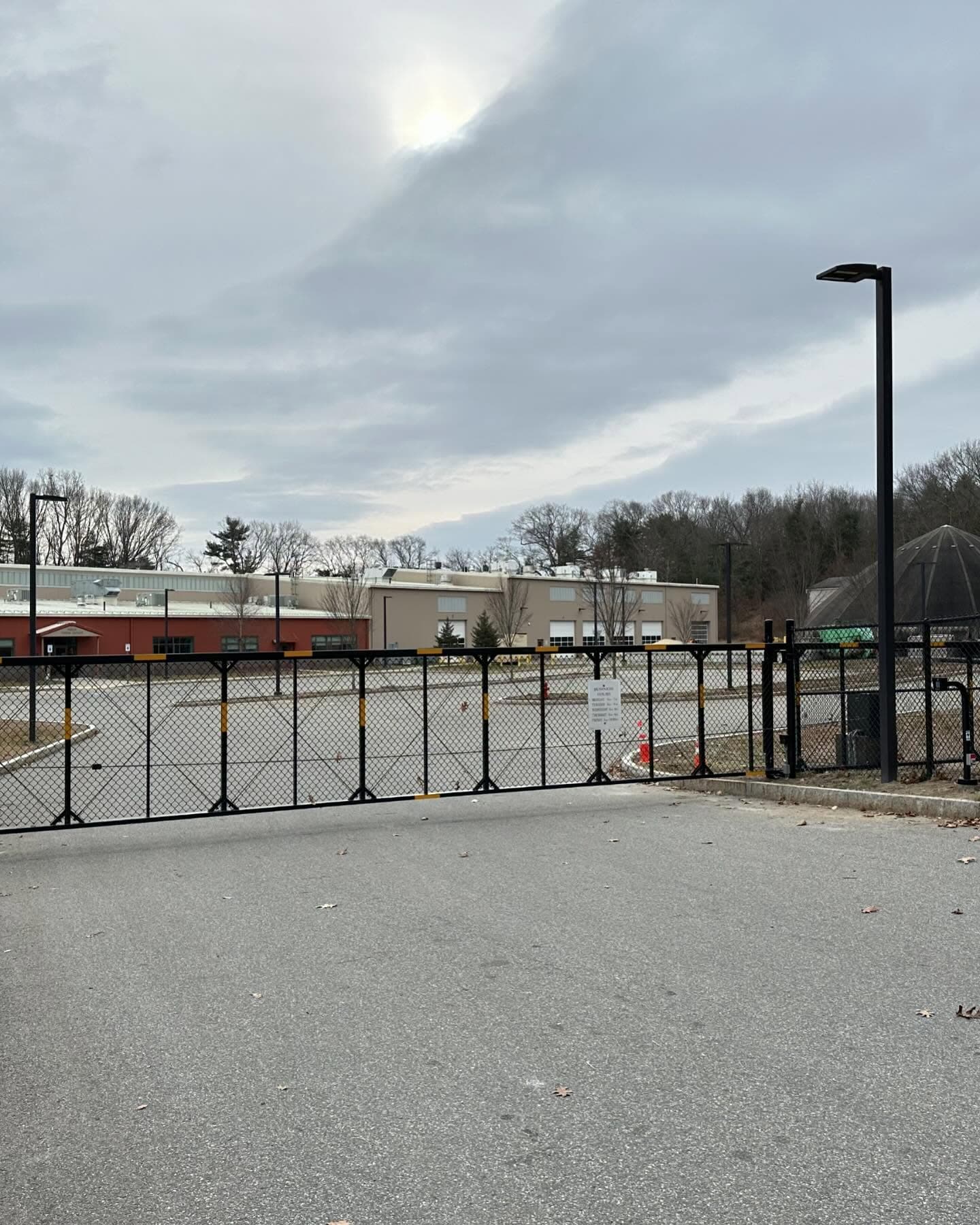
Boards run horizontal for a modern look, or overlap board-on-board so the fence reads finished from either side and leaves no gap. Cedar takes both and weathers slowly in New England.
A fence designed to match your house.
Horizontal cedar, custom gates, and mixed materials, drawn to your property and built for New England winters.
Let's Get Started On Your Fence Project...
The work
Two fences can use the same cedar and look nothing alike. Run the boards vertical and you get the traditional look; run them horizontal and the same yard reads modern. Set the boards tight for full privacy, or leave a small gap and you trade some of that privacy for light and airflow. Those are the choices a custom fence puts in your hands.
We start from your house and how you want to use the yard, then draw the fence to match: the material, the height, the board spacing, and the gates. It goes up as one considered piece, built to sit with your home instead of apart from it.
What we build
Every estimate is set to your property, but this is the shape of the work.
Boards run horizontal for a modern look, or overlap board-on-board so the fence reads finished from either side and leaves no gap. Cedar takes both and weathers slowly in New England.
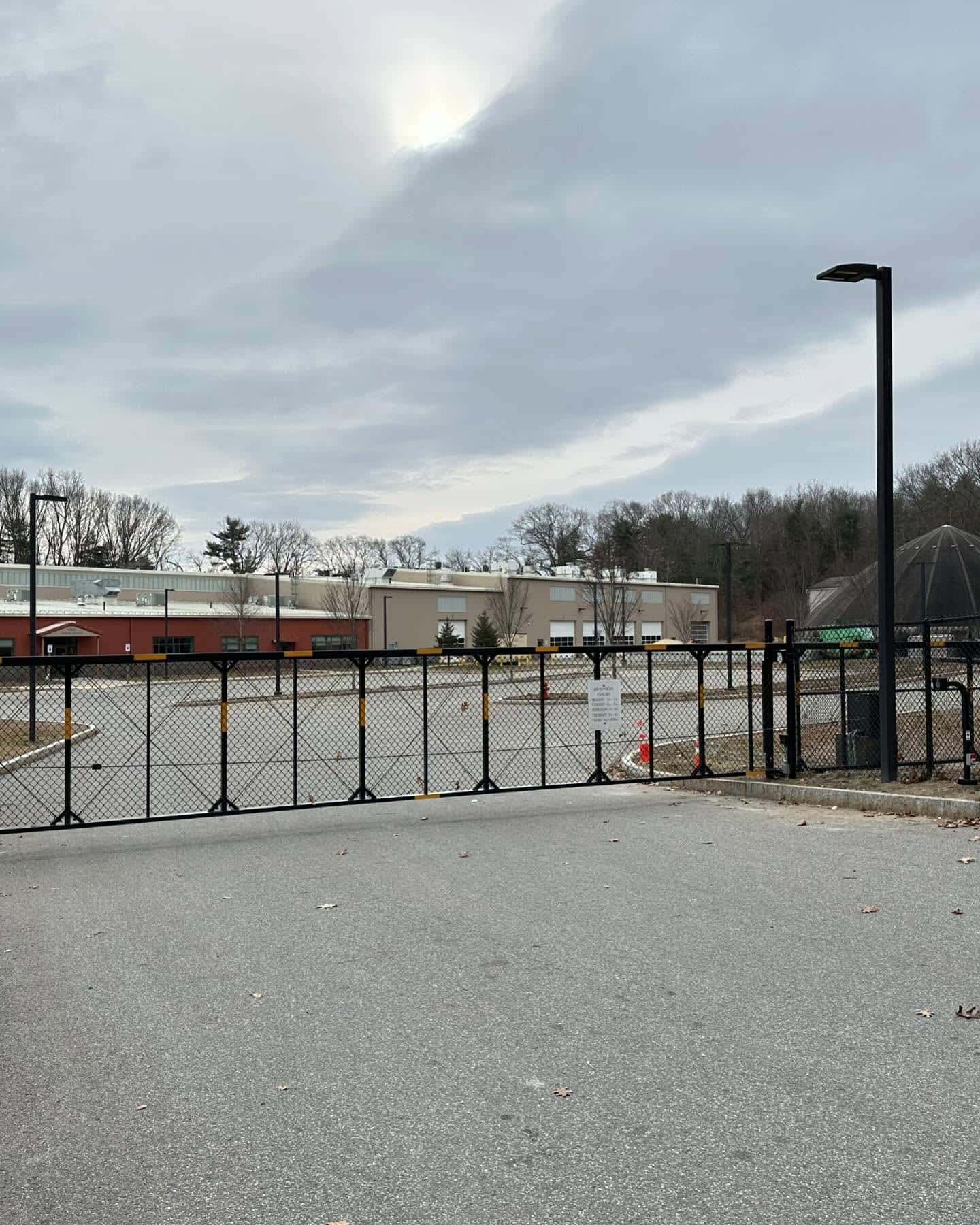
A driveway gate swings or slides depending on your grade, your side-yard room, and the width of the opening. We size the gate and its posts to the drive so it keeps working.
Cedar panels between steel or stone posts, a metal frame with wood infill, a design that uses more than one material where each one earns its place.
A solid fence with an open lattice or spaced top, so you hold privacy at eye level and let light and air through above it.
Height, color, and detail drawn to relate to the style and proportions of your house, so the fence looks like it was meant to be there.
How we work
The same order of operations on every job, so nothing gets undone later.
We start at your house. We look at the architecture, where your property line runs, how you use the yard, and what your town allows, then draw the design and put the layout and the price in writing. Once you sign off, we build it. The posts go below the frost line so New England winters cannot heave them, the boards are spaced the way we drew them, and every gate hangs on posts sized to carry it. The site is clean before we leave.
Why AnyFence
We design the fence to relate to your home's style and proportions, so it looks like part of the property rather than something added to it.
Posts set below the frost line and materials chosen for the climate, so a custom design still stands straight years on.
A custom gate is only as good as the post it hangs on. We size the posts and hardware to the gate so it keeps swinging true and latching.
Height limits and permits change by town. A taller or decorative fence can cross the point where the town has to sign off, and we know where that point is.
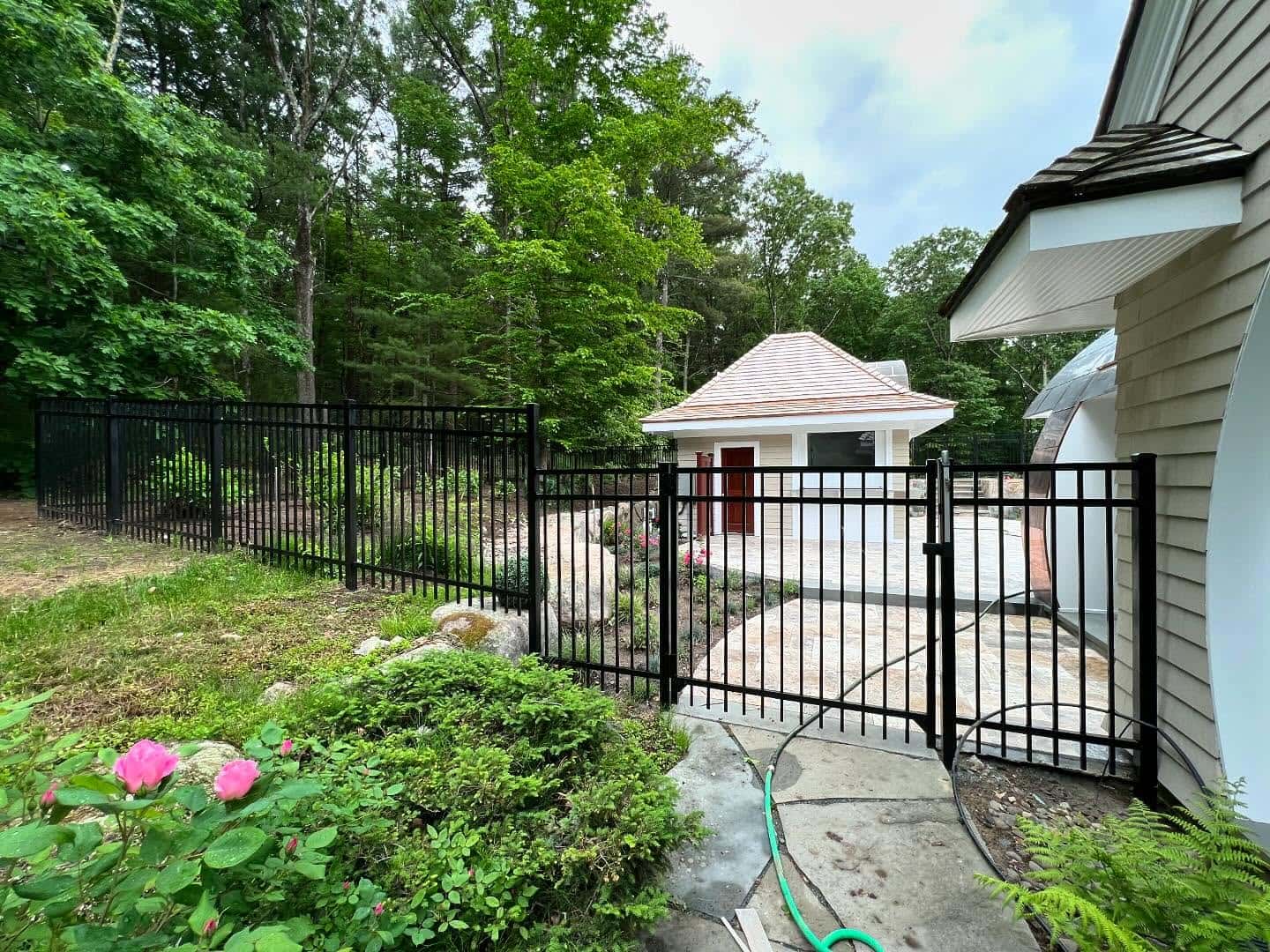
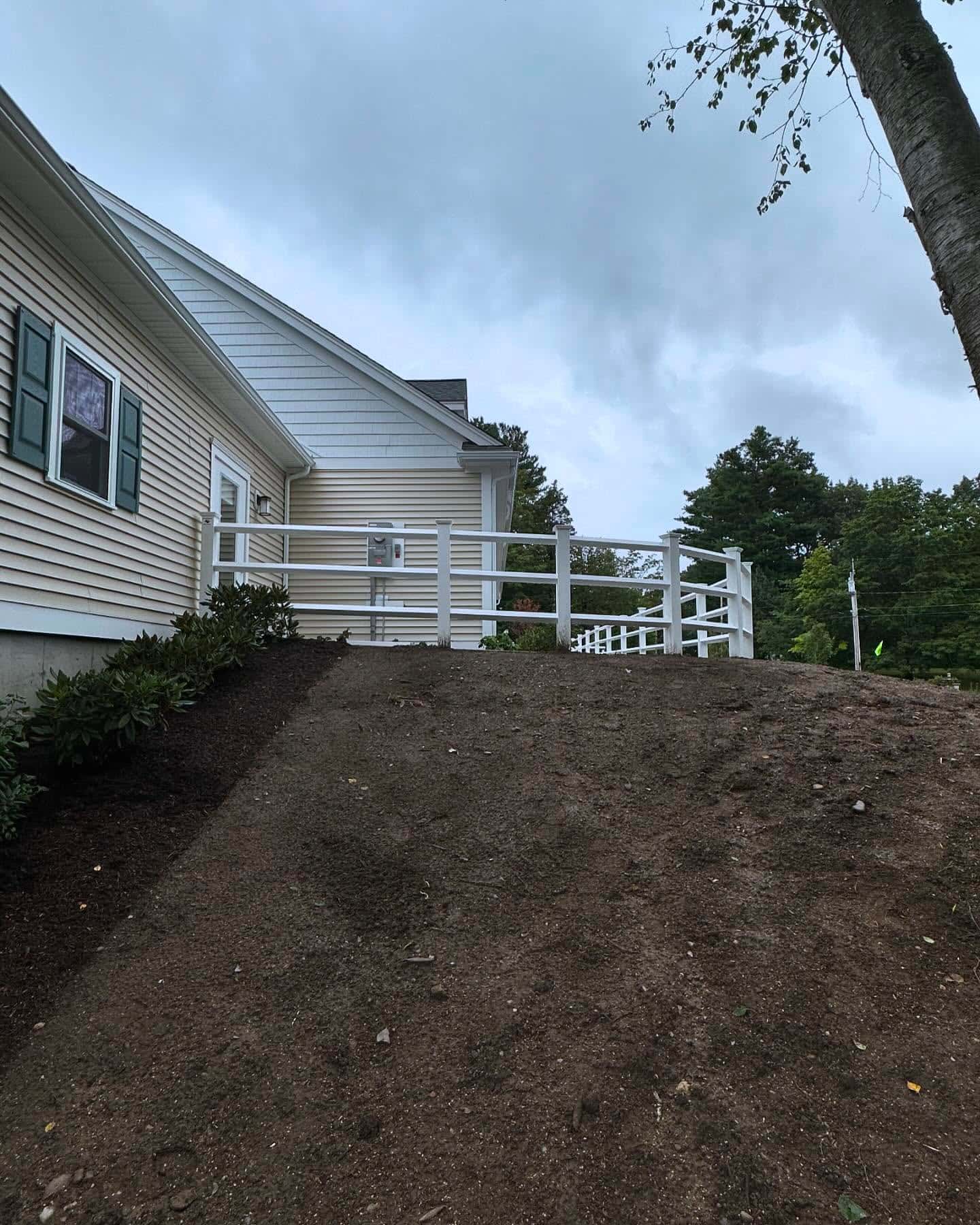
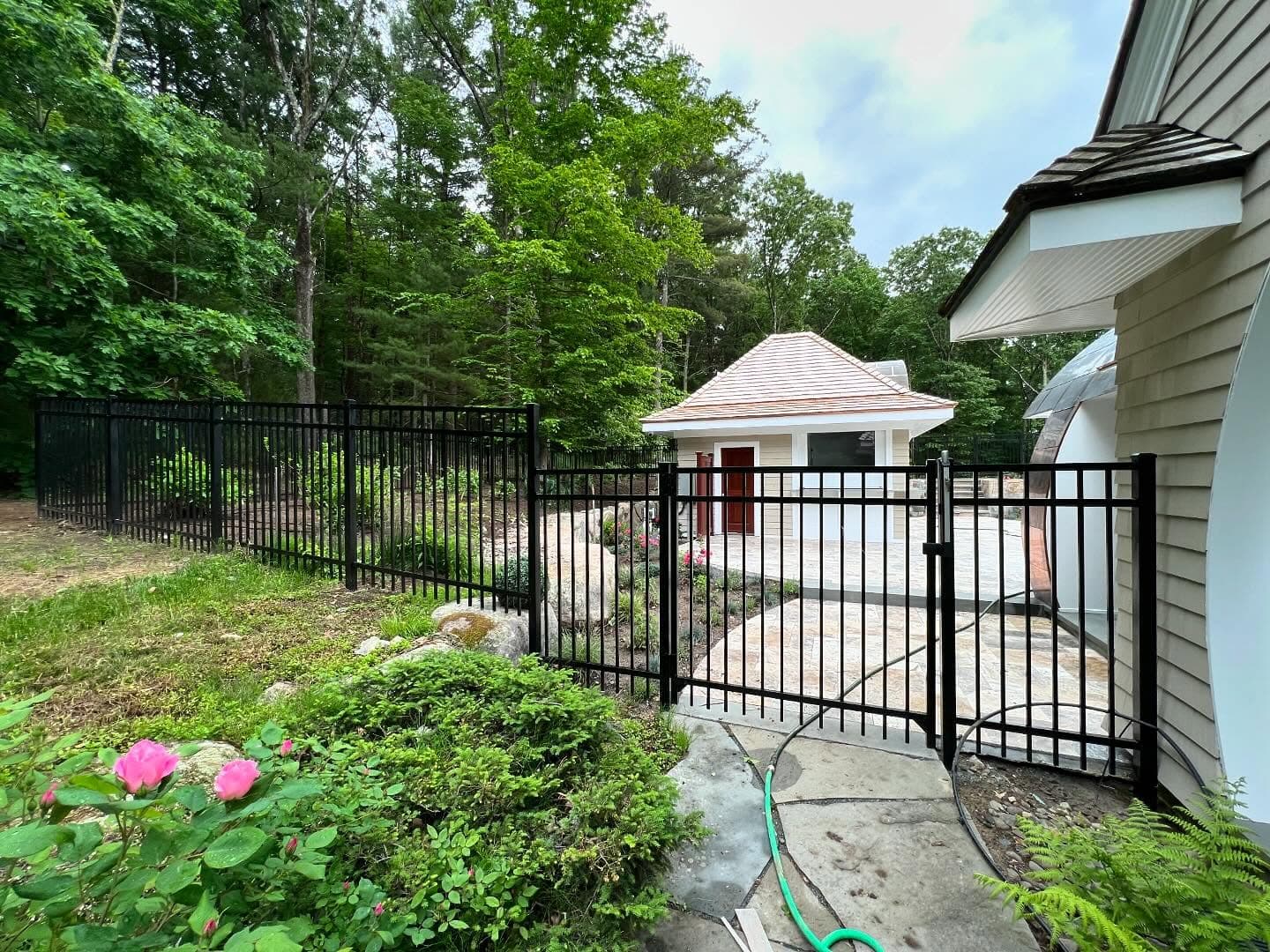
From our work portfolio
Different yards, grades, gates, and property lines, built by AnyFence crews.
Materials
These are the materials for this service. Pick by look, upkeep, and budget, or let us recommend on the site walk.
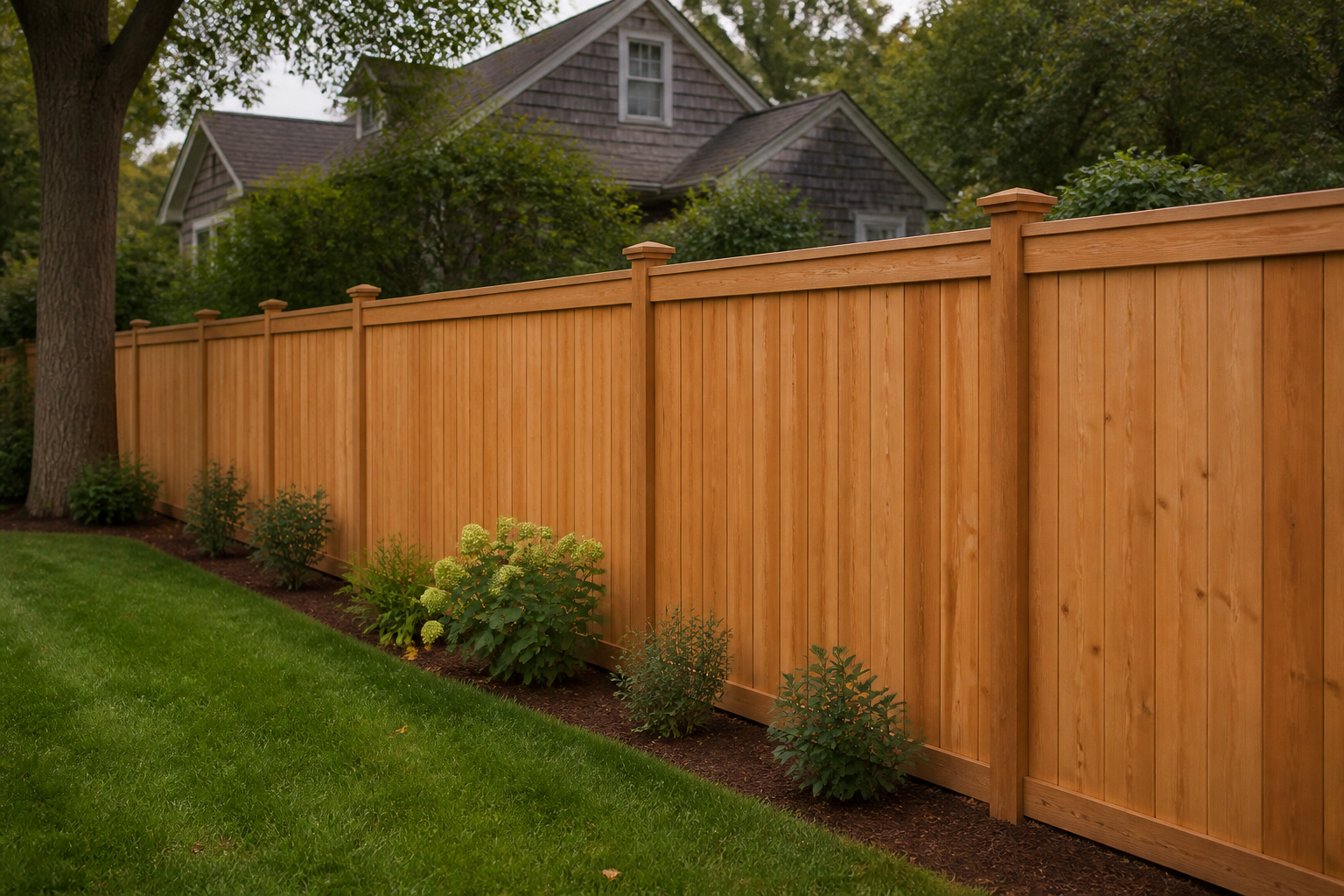 Wood Privacy FencesSolid 6 ft cedar or pressure-treated pine, no gaps, stockade or board-on-board. Full coverage from grade up for overlooked yards, exposed decks, and pools. The most wind-loaded fence we build, so post depth carries the job.
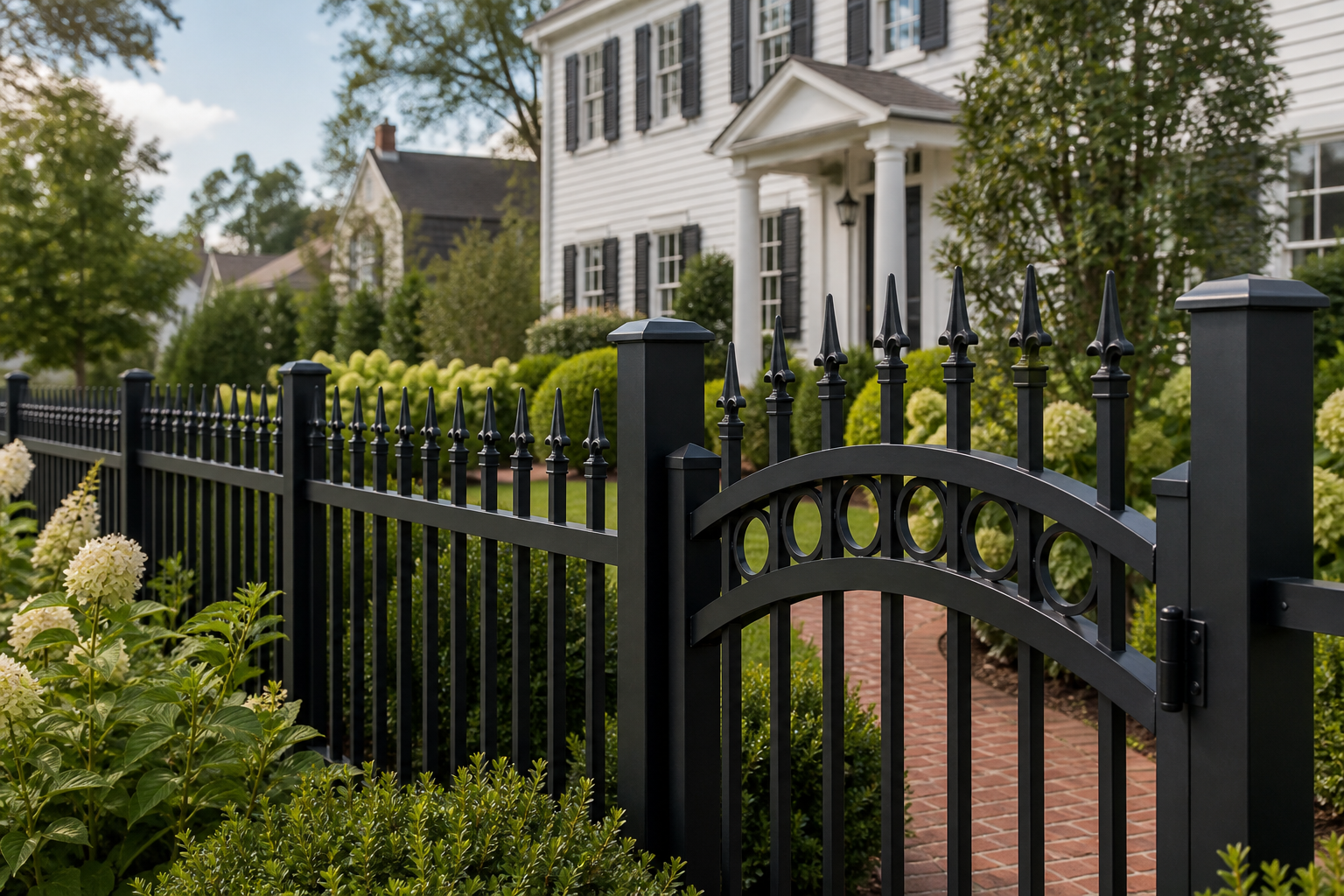 Aluminum FencesThe rust-proof ornamental fence. Aluminum panels rack to follow a sloped yard, arrive powder-coated in black or bronze, and meet Massachusetts pool barrier code at 4 ft with self-closing hardware. Runs $28 to $134 per foot installed.
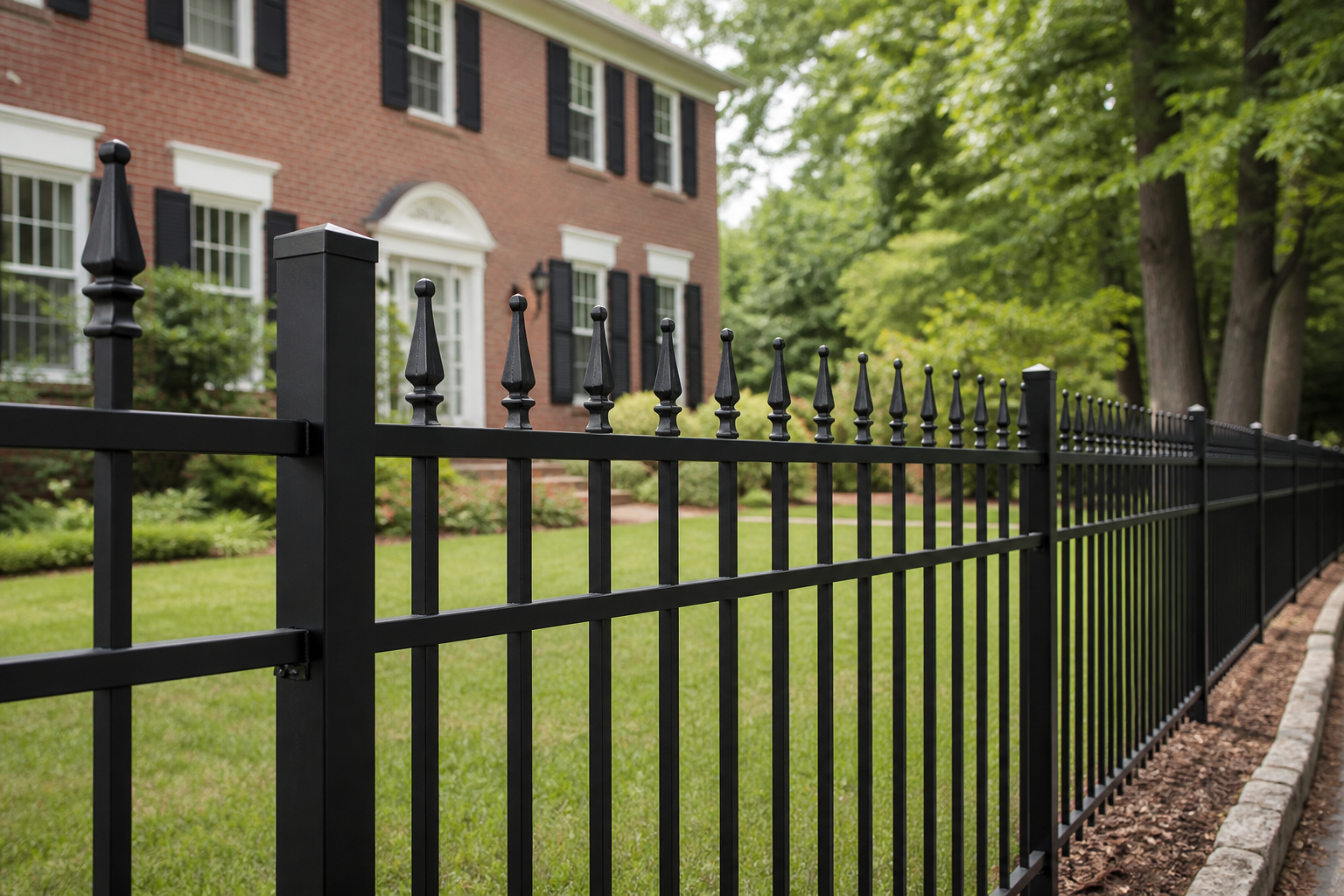 Metal FencesMetal fencing includes chain link and custom ornamental iron. It never rots or warps, it lets snow pass through open pickets, and posts set below the frost line hold their line for decades. Start here to find which metal fits the job.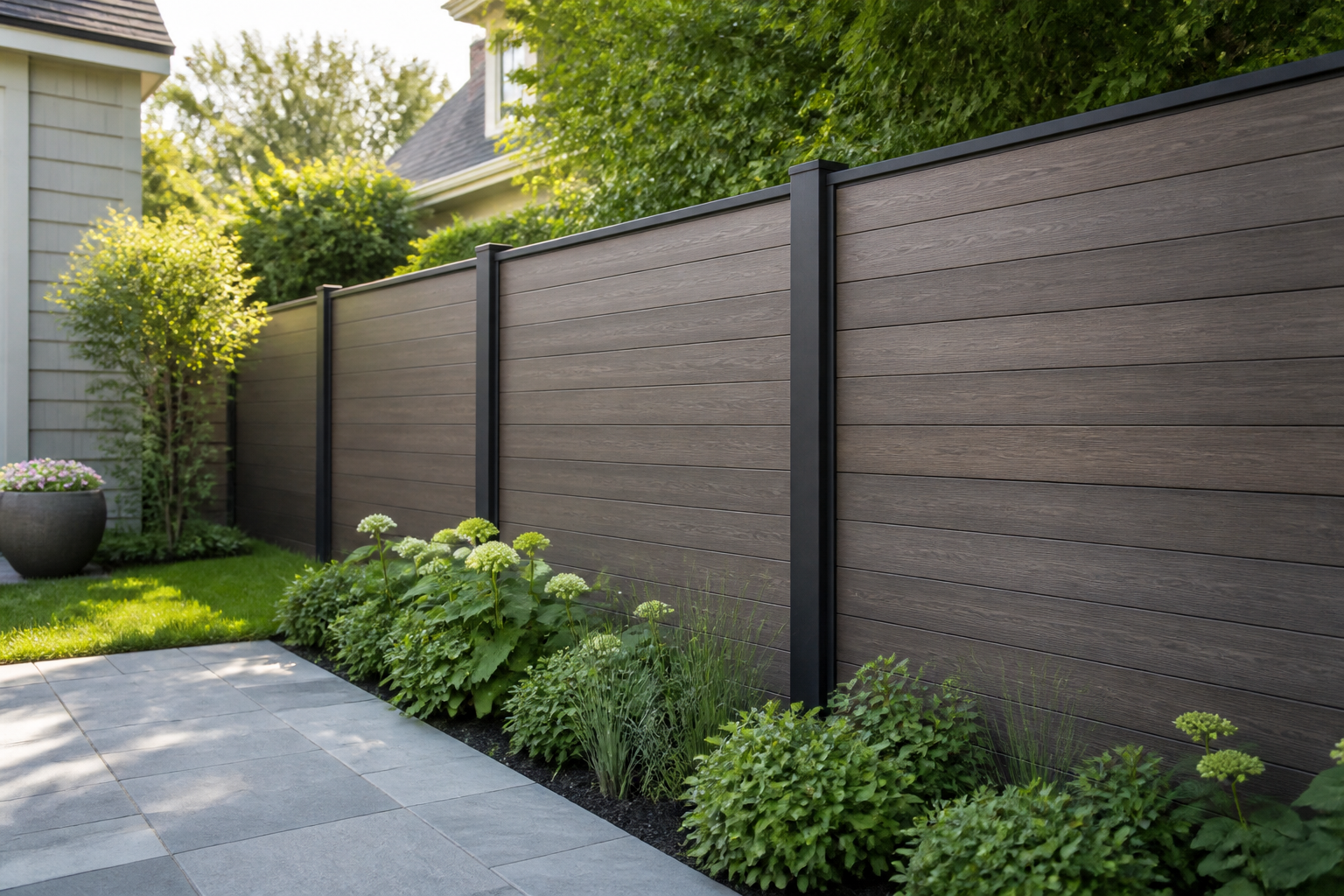
FAQ
That is where we start. We design from the architecture, the height, the color, and the proportions, so the fence relates to the house instead of standing apart from it.
Privacy comes from the spacing, not the direction. Tight boards give you full privacy run either way. Leave a gap and you get a lighter, more open fence that lets air and light through, whether the boards are horizontal or vertical.
The Massachusetts building code exempts fences up to seven feet, but most towns set their own limits through zoning, often around six feet in side and rear yards and lower out front. Go above your town's limit and the town has to sign off. A pool barrier always needs a permit. We check your town before we quote.
Cedar is a common choice because it takes a design well and weathers slowly. Wood fencing tends to run ten to fifteen years, pressure-treated a bit longer. We will walk you through what each option costs to own before you decide.
It depends on the drive. A swing gate needs a clear arc to open into, so it wants a flat, roomy approach. A slide gate rolls sideways along the fence and suits a sloped driveway, a short approach, or a wide opening. We look at your grade and clearance and size it to fit.
A well-designed fence can add curb appeal, though there is no guaranteed return at resale. It depends on the material, the neighborhood, and the condition of the property. We build for how you want to live with it now, and a fence people notice from the street does not hurt.